Tax Attorney vs CPA for Business Exits and Succession
Tax attorney vs CPA explained for owners planning an exit or succession. See who handles what, where they overlap, what it costs, and which to hire first.
October 8, 2026
By Remi Taffin · July 24, 2026
You’re probably running the business hard enough that tax only gets your attention when a deadline, a notice, or a buyer’s question lands on your desk. Revenue looks good, payroll is moving, vendors are paid, and then a tax estimate, a state filing, or a sale conversation exposes how much of that “profit” you get to keep. That’s the part too many owners miss, tax planning for business is really about preserving cash, reducing surprises, and protecting what comes out at closing.
The wrong way to think about taxes is as a January cleanup job. The right way is to treat them like a year-round operating decision, because the choices you make on entity structure, depreciation, payroll, retirement contributions, and deal structure all affect the final number you keep. That’s why a practical plan has to be exit-aware, even if you’re not selling this year, every annual move should be judged by what it saves now and what it leaves on the table later.
A profitable service business can still hand its owner a nasty tax surprise. I’ve seen owners grind through a strong year, only to discover that cash they thought was theirs was already spoken for by quarterly estimates, payroll obligations, state filings, and, if they’re selling, the tax hit tied to the deal itself. That’s not bad luck. It’s what happens when tax planning gets treated as a filing task instead of a management function.
The practical fix starts with cash discipline. A small-business guide recommends setting aside 30% to 35% of net business income for quarterly estimated taxes, roughly one-third, so the business doesn’t get squeezed when payments come due (Northwestern University small business tax strategies). That’s not a magic number, but it is a sane starting point for owner-operators who’d rather keep their bank balance steady than guess at year-end.
The owner who wins on taxes doesn’t just chase deductions. They line up the whole stack, entity choice, bookkeeping quality, state exposure, and exit timing, so each move serves the business instead of creating a future tax trap. Independent practitioner guidance frames good tax planning as continuous and data-driven, with quarterly reviews of financials, depreciation schedules, credits, and deductions so owners can legally defer or accelerate income and lower current liability (Sager CPA guidance).
That’s the point. Tax planning is not separate from operations. It sits inside pricing, hiring, equipment purchases, and deal readiness. If your records are sloppy or your structure is stale, you’re not planning, you’re just waiting for the bill.
Practical rule: If a tax move improves this year’s return but makes a future sale harder, slower, or more heavily taxed, it’s not automatically a win.
The same logic applies if you’re nowhere near a sale. Clean tax planning preserves optionality. It helps you fund growth without panic, keeps estimates manageable, and puts you in a stronger position when a buyer, lender, or successor asks for clean numbers. That’s the standard to use from here on out.
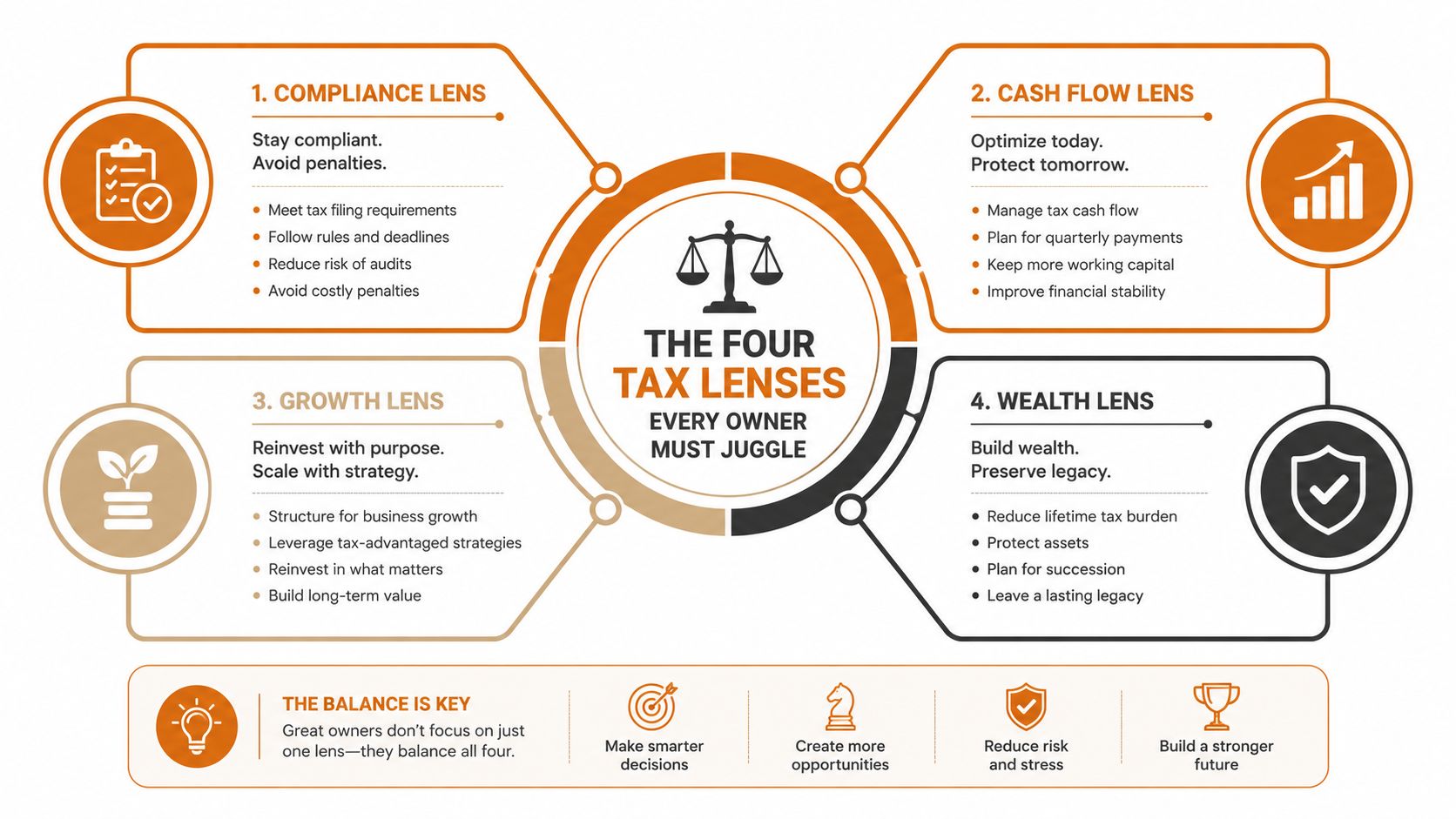
A lot of owners stare at tax planning through one lens, “How do I pay less this year?” That question is too small. The right move is to test every major decision against four lenses at once, because a deduction that looks great in April can hurt you at closing, raise state exposure, or leave family ownership tangled later.
Ordinary income and capital gains are taxed under different rules, and that difference drives real dollars at exit. Salary, guaranteed payments, and many operating profits are handled one way, while sale proceeds may be handled another depending on how the deal is structured. A business can be efficient in the operating years and still be poorly prepared for a sale if the owner never planned for how the gain will be taxed.
Selling the assets of a company is a different transaction from selling the company itself. In an asset sale, the buyer usually picks the pieces it wants and leaves the shell behind. In a stock sale, the buyer steps into ownership of the entity, which can make the transfer simpler but also changes the risk and tax profile. The right answer depends on what the buyer wants, where the seller stands tax-wise, and how the company was built.
A plain-language rule helps here. If you own the building and the operating company, the tax result can look very different from selling only the operating business or selling the shares of the entity that owns both. That is why a sale should be structured, not improvised.
| Dimension | Asset Sale | Stock Sale |
|---|---|---|
| Buyer perspective | Selects assets and liabilities more deliberately | Buys the entity itself |
| Tax character | Can create a mix of ordinary income and gain treatment | Often simpler on paper for the owner |
| Typical use case | Buyer wants a cleaner slate | Buyer accepts the existing entity and risk profile |
If you have not tracked basis, depreciation, and prior entity changes, you cannot reliably tell what you really own after tax. Clean records turn into real money here. A proper depreciation schedule can support legal deferral or acceleration choices, while a sloppy one leaves value stranded on the table.
Federal planning will not save you from state and local surprises. Payroll taxes, withholding, nexus, and filing obligations can change the after-tax result before anyone even gets to the federal return. If you have added remote staff, sold into new states, or expanded across borders, state and local tax is not a footnote, it is a live issue.
For family owners, coordination matters too, especially when ownership, inheritance, or succession is in play. The family side and the tax side collide fast, so keep your planning aligned with the broader transition plan, not just the current return. If that is on your radar, review estate planning for business owners alongside the tax work.
One bad structural choice can take a strong sale and leave the owner with a weaker check at closing. The buyer’s deal form, the entity you use, and the state rules attached to both can change what gets taxed, when it gets taxed, and how much cash survives after settlement. Bloomberg Tax’s guidance is blunt on this point, owners need to identify which tax provisions are existing, expired, or sunsetting in each operating jurisdiction because those rules shape entity choice, timing, and transaction structuring (Bloomberg Tax corporate tax planning).
Start with the tax event, not the headline price. A buyer can purchase assets, or the buyer can purchase ownership interests. Those two structures do not produce the same tax result. They change what gets stepped up, what stays behind, and how much of the proceeds show up as ordinary income, capital gain, or something in between.
The entity underneath the business matters just as much. Sole proprietorships, partnerships, S-corporations, and C-corporations all send the sale through different tax routes. Some are fine for daily operations and messy at exit. Others make a sale easier to price but create trade-offs while you are still running the business.
Buyers care about liability, basis, and transition risk. Sellers care about what is left after tax. Those priorities overlap, but they are not the same.
That is why the best tax plan starts by asking where the buyer gets comfort and where you lose money. If you understand that tension early, you can shape the deal instead of accepting whatever falls out at closing. That is also why the sale mechanics matter so much, and why owners should review asset sale versus stock sale before they let a term sheet harden into a bad tax outcome.
Specialist guidance for 2025 also points owners toward installment-sale treatment, qualified small-business stock exclusion, and pre-sale compensation accumulation because those choices can change the after-tax number in a real way. Use them early, not as a cleanup move after the sale is already in motion.
| Dimension | Asset Sale | Stock Sale |
|---|---|---|
| What changes hands | Selected business assets, sometimes specific liabilities | Ownership of the entity |
| Seller tax profile | Can split proceeds across multiple tax characters | Often more straightforward for the seller |
| Buyer appeal | Cleaner control over assets and liabilities | Simpler transfer in some deals |
| Best fit | Buyer wants to cherry-pick assets | Buyer is comfortable buying the entity |
The point is simple. A strong operating tax plan and a strong exit tax plan have to work together. If you ignore one side, the other one usually costs you at closing.
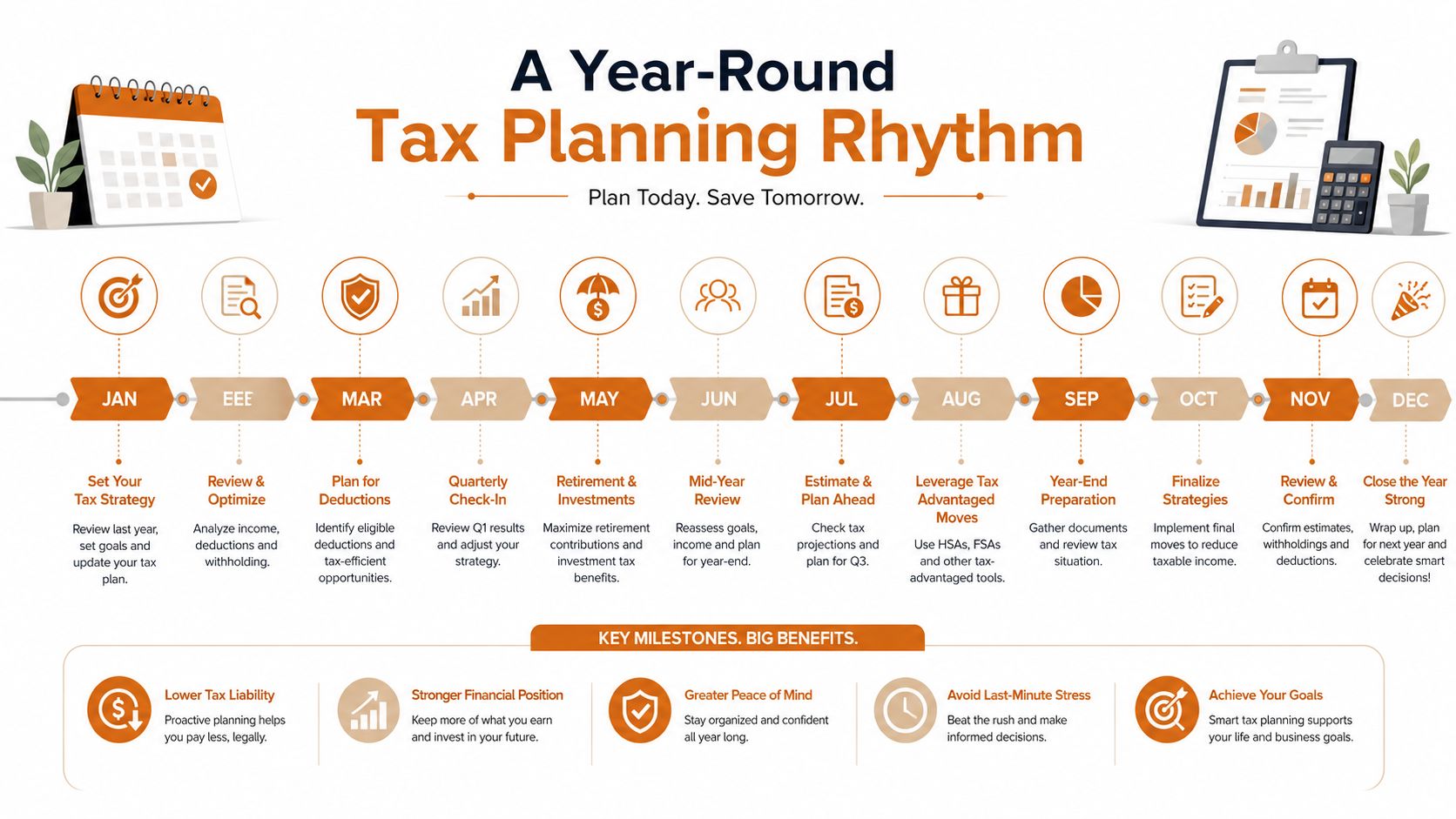
A good tax plan follows the business calendar, not the filing deadline. Owner-operators who wait for year-end usually lose options, miss clean-up opportunities, and hand the IRS a larger share than necessary.
By the middle of the year, the numbers should already be telling you whether the plan is working. Estimated payments need a fresh look, deductions should be flowing into the books, and cash should be mapped for the next tax bill instead of guessed at from the checking balance. If profits are running ahead of plan, increase the tax reserve now. If revenue has slipped, revise the set-aside before the shortfall turns into a penalty problem.
This review is also the point where owners should stress test the exit file. A business that looks fine on an income statement can still be messy at closing if expenses are not coded cleanly, ownership draws are inconsistent, or related-party payments are sloppy. Generic tax guides ignore that detail. Owners should not.
Fall is the time to pressure-test the structure of the business. Check whether the entity still fits how the company earns money, whether the owner’s pay still matches the work being done, and whether retirement contributions or other deferral tools still make sense for the year. If the business is in a high-growth phase, the right setup can support both current tax efficiency and a cleaner sale later. If the structure is stale, it usually shows up in taxes first.
It also pays to ask whether the current setup creates friction in the jurisdictions where the business operates. State filings, payroll rules, sales tax exposure, and cross-border activity can all change the picture fast. A structure that looks fine on paper can be expensive in practice if it ignores where the income is earned or where the owner lives.
Practical rule: If you wait until December to think about depreciation, compensation, or retirement planning, you have already narrowed your options.
Year-end should confirm decisions that were made earlier, not replace them. Review depreciation schedules, confirm contribution timing, and clean up anything in the books that could distort the return before filing. This is execution time. It is not the time to invent a tax strategy after the facts are already locked in.
Cash discipline keeps the process honest. Revisit the 30% to 35% set-aside benchmark for estimated taxes and use it as a stress test for liquidity. If the reserve feels tight, do not pretend it is fine. Tighten the plan, slow unnecessary spending, or adjust owner draws before the bill arrives.
After filing, the work starts again. The return shows what happened, and the next plan should show what to change before the next year closes.
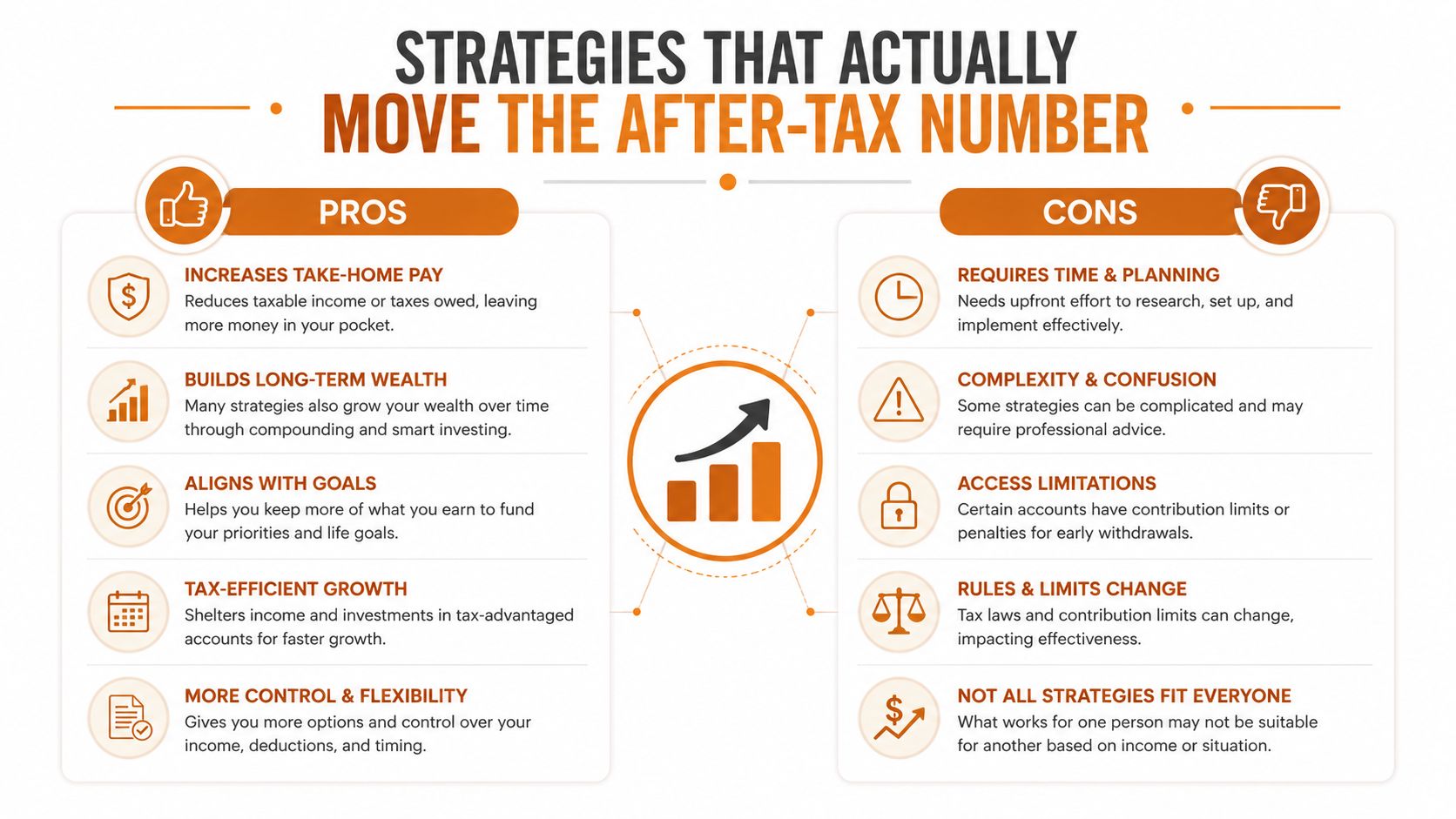
The strategies that move the closing number fall into three buckets, deferral, utilization, and structure. Owners waste too much time chasing tiny deductions and not enough time on the levers that change what they keep at exit.
Retirement plans, installment sales, and certain depreciation choices can push tax out of the current year. That helps when cash is tight or when you expect to be in a different position later. It is not free money. Every deferral tool trades present tax for future complexity or future liability.
A mid-career owner usually gets the most value from deferral when the business is profitable but not yet in transition. An owner nearing sale needs a different question, whether the deferral helps the operating business or just adds baggage to the exit. The wrong deferral can make a later transaction harder to price, structure, or close.
Credits and loss carryforwards can reduce current tax, but only if the business has the records and the income profile to use them. If the company is growing unevenly or moving between profitable and unprofitable years, the timing of usage matters as much as the credit itself. Good bookkeeping turns a theoretical tax benefit into a real one.
Jurisdiction rules matter here too. A credit that works cleanly in one state may not carry the same way across state filings, and cross-border activity can change how losses and deductions land. Owners who ignore those rules end up with paper savings that do not translate into closing cash.
Entity conversions, family transfers, and charitable structures can all be powerful. They can also lock you into a path that is unfriendly to a later sale. That is why you should never make a structure change just because it reduces this year’s tax. The question is whether the change improves the whole ownership arc, from now to closing to transfer.
Exit planning should drive the decision. A structure that looks efficient on a return can create friction with buyers, lenders, or tax authorities in more than one jurisdiction. If the owner may sell across state lines or across borders, that friction shows up fast.
Specialist guidance for 2025 points owners toward installment-sale treatment, qualified small-business stock exclusion, and pre-sale compensation accumulation because those choices can materially change after-tax exit proceeds. That is the right mindset. Use tax tools to improve what you keep, not just what you report.
Bottom line: The best tax strategy fits your business model and your exit path, not the one that sounds clever in isolation.
An HVAC owner with $1.2 million in S-corp earnings is looking at two very different outcomes. One path is disciplined and boring in the best way. Fund a retirement plan, time equipment spending with intent, and clean up the books now so the tax bill does not ambush cash later. That keeps more control in the owner’s hands, which matters when the business needs reserves and when a future buyer starts asking what the earnings really were.
A plumbing contractor expecting $4 million in sale proceeds has a different problem. Annual deductions matter, but the deal structure matters more. An asset sale can leave the seller with a very different tax result than a stock sale, and an installment structure can spread when tax is recognized. The right question is not how to squeeze out one more deduction. It is how the buyer wants to buy, how the seller gets taxed, and what the owner keeps after closing.
Jurisdiction-specific rules change the result fast, especially when income is earned in one place, people work in another, and the sale is structured somewhere else. That is why a simple sketch is useful, but only as a starting point. The plain warning from Bloomberg Tax corporate tax planning still applies, different places can produce different tax outcomes from the same business activity.
If you can put the deal, the entities, and the tax exposures on one page, you are asking the right questions. If you cannot, bring in a specialist before the problem gets expensive.
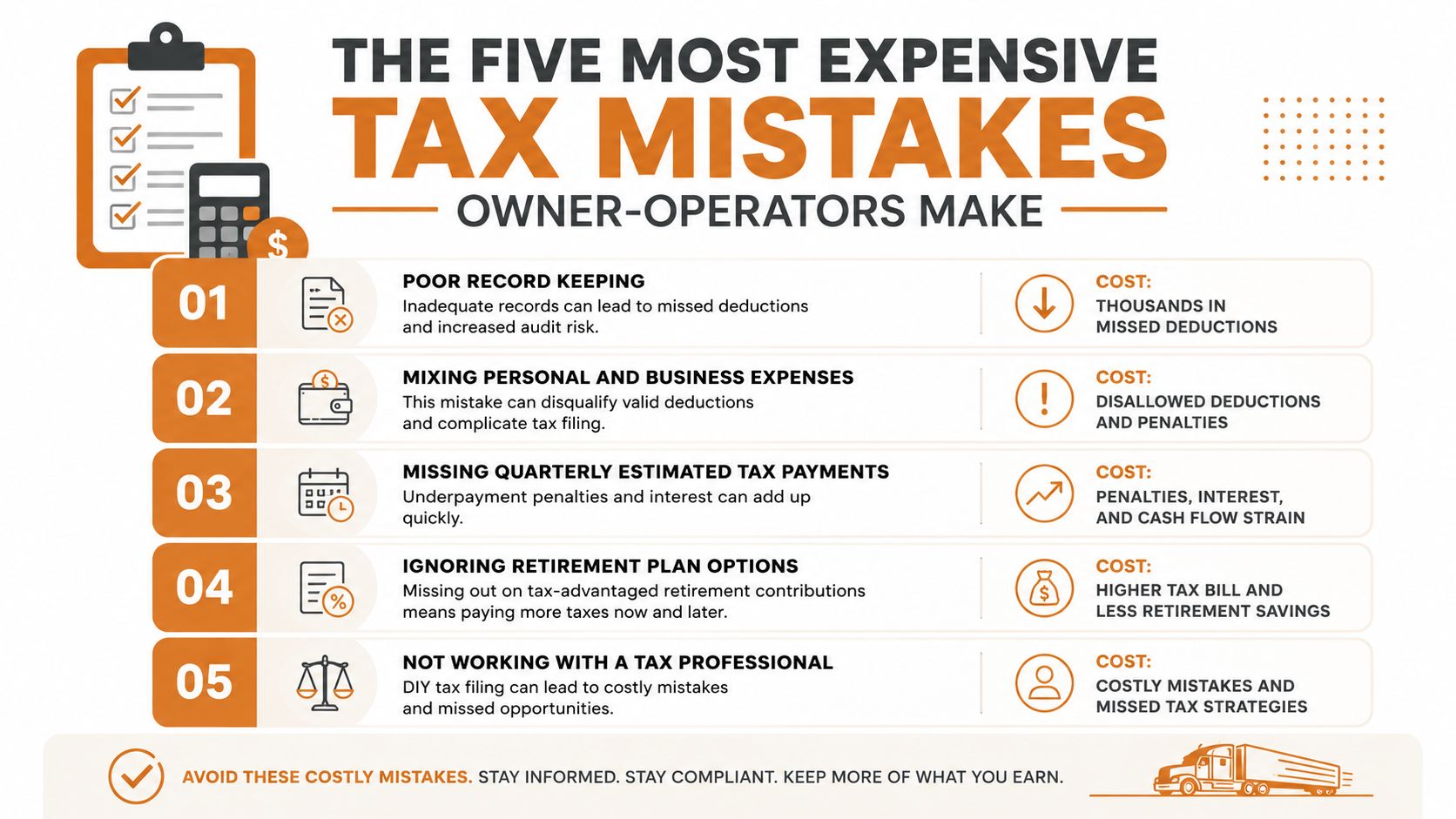
The costliest mistakes are usually boring, which is exactly why they get ignored. Owners don’t lose money because they forgot tax exists. They lose money because they keep treating the same bad habits as manageable.
One common pattern is tax procrastination. The owner waits until January, then asks the CPA to solve problems that were created twelve months earlier. Another is jurisdiction blindness. The owner hires remotely, expands sales, or opens a new location and assumes the original filing footprint still fits.
There’s also a more subtle mistake, confusing the goal. Lowering this year’s tax is not the same as maximizing what you keep over the life of the business. Once you separate those two ideas, a lot of bad advice stops looking attractive.
Build a 90-day cleanup plan. Reconcile books, review prior filings, map where the business operates, and check whether the current entity still supports the exit you want. If the business has grown, crossed state lines, or added remote workers, the risk profile has changed.
The market is clearly moving in this direction. The global tax advisory market is projected to grow from USD 105.2 billion in 2025 to USD 187.4 billion by 2033, at roughly a 7.8% CAGR, which reflects how central specialized planning has become to compliance, risk, and value preservation (DataHorizzon Research tax advisory market). That doesn’t mean every owner needs a big-firm solution. It does mean the old “just let the return get filed” mindset is no longer good enough.
If you’re deciding whether to bring in help, ask one question. Do you need someone to file returns, or someone to shape the tax outcome of the business itself? Those are not the same role.
Start with the documents. Pull the last two years of returns, the current entity paperwork, prior depreciation schedules, payroll records, and any sale, succession, or restructuring notes you already have. Then build a forward-looking estimate using today’s revenue and expense run-rate, not last year’s history.
Next, run the business through an exit lens. If you sold in the next twelve to twenty-four months, what structure would you want in place today? If the answer is unclear, that’s your signal. The right specialist should be able to explain how entity choice, compensation design, and deal structure affect the amount you keep.
A tax CPA who focuses on compliance keeps you clean and filed correctly. A tax strategist helps you plan around estimates, exit timing, and structural trade-offs. You often need both, but you need to know which problem you’re solving first. For owners looking for a curated starting point, corporate tax planning services can help frame the specialist search.
Use the next 90 days to do three things. Clean the books, test the exit assumptions, and identify the questions only a specialist can answer in your jurisdiction. This article is educational, not personalized tax advice, and the right answer always depends on your entity, your states, your books, and your exit plan.
A CTA for The Owner’s Shortlist.
Tell us your situation. We'll connect you with a specialist who works with owners like you. One conversation, no sales pressure.
Found this useful?
Add The Owner's Shortlist as a preferred source and get our articles highlighted in Google Search results.
Add to Preferred SourcesTax attorney vs CPA explained for owners planning an exit or succession. See who handles what, where they overlap, what it costs, and which to hire first.
October 8, 2026
Explore business tax planning strategies for small and mid-sized owners preparing for succession or sale, with trade examples and expert guidance.
October 1, 2026
Understand business sale capital gains tax before you sell. Learn short vs long-term rates, asset vs stock sales, and planning strategies to keep more proceeds.
September 30, 2026
Learn what is capital gains tax, how short- and long-term rates work, and how the rules apply when you sell a business. Clear guidance
September 22, 2026