Reps & Warranties in M&A: A Practical Guide for Owners
Learn what reps & warranties mean in M&A deals, why they matter, and how to negotiate them effectively. A clear guide for business owners.
September 27, 2026
By Remi Taffin · September 29, 2026

A tuck-in acquisition is a deal where a larger buyer completely absorbs a smaller company into its existing operation, and the seller’s separate brand, systems, and organizational identity usually disappear after closing. It’s not a partnership and it’s not a merger of equals. It’s an absorption deal, and in broader M&A activity, tuck-in and bolt-on deals accounted for 46% of all transactions executed in 2022 according to one industry source (Dealroom on bolt-on and tuck-in acquisitions).
If you own an HVAC, plumbing, electrical, or other service business, this is probably the situation you’re staring at right now. A larger regional buyer, often backed by private equity, wants your technicians, your customer list, your maintenance agreements, your trucks in a territory they want to own, and your cash flow. What they usually don’t want is your business to remain your business.
That distinction matters. Owners hear “strategic acquisition” and assume their name might stay on the trucks, their office manager will keep running the shop, and their customers won’t notice much. In a real tuck-in, that assumption is often wrong.
You built a respected local HVAC, plumbing, or service brand over years. Then a larger operator offers to “bring you into the platform.” Before you celebrate, ask what survives after closing. In a tuck-in, the buyer typically wants your customers, technicians, service agreements, territory, and cash flow inside its existing operation.
A tuck-in acquisition is a transaction in which a larger company folds a smaller target into its current business instead of keeping it as a standalone entity (Investopedia definition of tuck-in acquisition). You may sell the legal entity and its assets, but your operating identity usually does not continue as owners expect.
The buyer’s integration plan often determines your outcome before the deal closes:
Your brand may have been the reason customers called. After absorption, the buyer may treat that name as a transition tool rather than a lasting asset. Staff may stay, but their roles, reporting lines, pay structures, and performance targets can change quickly.
The defining test is simple: if your systems, brand, and org chart are scheduled for replacement, you are being tucked in, not partnered with.
Owners in fragmented trades often mistake a tuck-in for a friendly partnership because the buyer speaks positively about their reputation and team. The buyer’s economic case is different. Value comes from combining operations, removing duplicated overhead, and using its existing platform rather than preserving your standalone growth path, as explained in Corporate Finance Institute’s explanation of bolt-on acquisitions.
For a seller, that distinction affects the exit discussion. The buyer is paying for the earnings and customer relationships your business contributes after integration, not necessarily for your continued independence. Price, employment terms, retention expectations, treatment of recurring contracts, and the timing of brand removal must be addressed before you sign. If you want the name, team, and operating control to remain intact, a tuck-in structure is the wrong assumption to carry into negotiations.
Most owners don’t lose a deal because the price was bad. They lose negotiating power because they agreed to a structure they didn’t understand.
“Bolt-on,” “add-on,” “platform,” and “tuck-in” get thrown around loosely. In your world, the important questions are simple. Does the brand survive? Who runs the business after closing? Are customers staying with your name or moving to theirs?
| Deal Type | Brand Survival | Operational Autonomy | Primary Buyer Motivation |
|---|---|---|---|
| Platform | Usually strongest chance of surviving | Highest autonomy of the three | Create the main operating base for future acquisitions |
| Bolt-on | Sometimes retained, at least for a period | Partial autonomy may remain | Add geography, service lines, or capacity to a larger business |
| Tuck-in | Usually limited or temporary | Low autonomy after close | Absorb customers, staff, assets, and cash flow into an existing operation |
A platform deal is the opposite of a tuck-in in one way. In a platform deal, the buyer often needs your infrastructure, leadership team, and operating base to serve as the foundation for future acquisitions. In a tuck-in, they already have the platform. You’re being folded into it.
A bolt-on sits somewhere in the middle. Public explainers often blur the line, but the seller-facing difference is practical. A bolt-on may keep more of its identity or operating rhythm for a while. A tuck-in usually doesn’t.
Owners often hear a buyer say, “We love your brand,” and take that as a commitment. It isn’t. Unless the purchase agreement or transition documents say the brand remains in market for a defined period, you should assume the buyer can phase it out whenever it suits the integration plan.
That’s why you need to understand the buyer’s broader buy-and-build strategy. If you’re one of several local service businesses being assembled under a regional operator, your likely role is not to remain distinct. Your likely role is to help the platform get denser in one market, one route map, or one service category.
If you want your name to survive, don’t negotiate from sentiment. Negotiate from documents.
Ask these questions early, and ask them in writing:
If the buyer can’t answer clearly, they either haven’t thought through integration or they don’t want you focused on what happens after the wire hits your account. Neither answer helps you.
You sell an established HVAC or plumbing company, and the buyer immediately sees duplicated costs, overlapping staff, and systems it can absorb. That is the business case for a tuck-in. The buyer wants your customers, technicians, and earnings inside its existing platform, not operating beside it.
An industry explanation of tuck-ins identifies multiple arbitrage and synergy capture as common reasons buyers pursue these deals (IB Atlas on tuck-in and bolt-on acquisitions). In practical terms, the acquirer buys a smaller company at a lower EBITDA multiple than the platform’s implied multiple, then aims to improve the combined earnings through integration.
The playbook is straightforward in fragmented, owner-operated sectors:
That explains the buyer’s focus on control. The integration plan determines how your people, contracts, dispatch, and customer relationships fit into its operating model.
Before negotiating with a consolidator, review how private equity roll-ups typically assemble fragmented service businesses. The structure affects what survives after closing and what gets folded into the platform.
Buyers typically target cost and revenue synergies during the first one to two years after closing. In an HVAC or plumbing tuck-in, that can mean consolidating two dispatch software subscriptions, moving bookkeeping into the platform’s shared-services team, and combining purchasing across locations.
Other common targets include:
The financial logic is simple. Remove duplicated costs, standardize processes, and increase the earnings produced by the same customer and technician base.
Your company may feel personal to you. The buyer sees overlapping functions it can remove.
That perspective also explains why a buyer may preserve recurring service contracts while retiring your name, changing dispatch procedures, or reasssigning administrative work. The contracts generate value. The legacy structure may not.
You sign the LOI expecting a transaction. After closing, customers still need answers, technicians still need routes, and someone must explain why the truck outside now carries another name. The buyer’s integration plan becomes visible through phones, schedules, service records, and staff decisions.

For an owner-operated plumbing or HVAC company, the buyer usually takes control of practical operating assets first: maintenance customers, open work orders, service history, technician schedules, vendor relationships, and local phone traffic. The integration team starts testing those assets immediately. Your value is no longer tied only to the company name. It is tied to whether customers, contracts, and technicians transfer without losing revenue.
A seller-focused explanation from Investopedia’s tuck-in acquisition Q&A highlights the question owners often overlook: what gets integrated, when, and what is intentionally left separate.
In home services, the answer affects customers quickly:
Owners often assume a sale means both companies become one visible business. A tuck-in usually produces a more specific result: customers move, operations merge, and the old corporate shell is cleaned up later. If brand continuity matters, treat it as a negotiated deal term, not an expectation.
The buyer usually keeps technicians who produce, dispatchers who know the customer base, and managers who can steady the handoff. Duplicate administrative roles face more pressure because the platform already has payroll, bookkeeping, HR, and management functions.
Expect difficult questions about:
Staff retention depends on clear communication before and after closing. Identify who owns customer relationships, who controls schedules, and who can approve changes. A buyer that cannot explain those responsibilities will create avoidable turnover.
You built trust under a local name. A tuck-in can convert that identity into a line item within a larger branch network. The financial outcome may satisfy you while the personal outcome feels like a loss.
Before signing, decide whether preserving your brand, staff continuity, or customer experience matters enough to negotiate. After closing, your influence drops sharply.
Tuck-ins fit owners who accept absorption as part of the exit. If you expect the business to keep operating as an independent local brand, this structure may disappoint you. Get the brand treatment, employee plan, contract transfers, and transition responsibilities in writing before closing.
A buyer may pitch a tuck-in as simple. The payout rarely is.
The headline price matters, but your real outcome depends on how the buyer prices integration risk. If they think customer churn, technician turnover, messy books, weak contract assignability, or poor data migration could hit post-close performance, they’ll protect themselves somewhere in the deal structure.
The market likes tuck-ins, but execution is uneven. A seller-focused industry article noted that in commercial printing, tuck-ins rose to 42% of announced deals in 2025, up from 31.3% in 2023 and 26.5% in 2024 (Firmex on completing a tuck-in acquisition). That trend was reported in one niche, not as a universal market fact, but it highlights something important. Buyers like these deals. Integrating them cleanly is another matter.
In trades and field services, integration risk often sits in ordinary operational details:
Those issues can affect earn-outs, escrows, holdbacks, and indemnity negotiations even when the initial valuation sounds attractive.
If you want a practical framework for preparing materials, this M&A due diligence guide is a useful checklist for organizing contracts, financials, compliance items, and operating records before a buyer turns every missing file into advantage.
You should also understand how buyers think about synergies because they may try to pay you as if those gains belong entirely to them. A seller who can speak clearly about integration burden has a better chance of pushing back on that narrative. This explanation of the definition of synergies in business is useful if you want the vocabulary to challenge a buyer’s assumptions.
A messy integration can turn a “great multiple” into a disappointing net result if too much of your consideration depends on what happens after close.
Don’t let a buyer use integration complexity as a reason to lower the upfront price unless the issue is real and documented. If the business depends heavily on you, say that plainly and solve for it with a structured transition plan. If customer contracts are weak, fix what you can before going to market.
Most important, separate these two ideas in your own head:
Those are not the same number.
If a buyer has already sent an LOI, you’re late. Not doomed, but late.
Tuck-ins move fast because the buyer already knows the playbook. You usually don’t. That imbalance is exactly why owner-operated sellers need specialist help before exclusivity starts.
For this kind of deal, I’d bring in three people early:
A general business lawyer who handles leases and employment matters may be excellent at what they do. That still doesn’t mean they should lead your sale documents.
In a tuck-in, good advice isn’t abstract. It should result in specific protections.
Ask your deal team to focus on points like these:
This is one area where a curated resource can help. The Owner’s Shortlist organizes vetted specialists across valuation, taxes, legal matters, succession, and related owner decisions, which can be useful if you know you need expertise but don’t want to sort through generic directories.
Good advisors don’t just explain documents. They change the deal you sign.
A tuck-in is often the right exit for a local trade business. It can also be the wrong structure if your value depends on the brand staying independent or if the company falls apart without you. You need to know which situation you’re in before a buyer tells you.
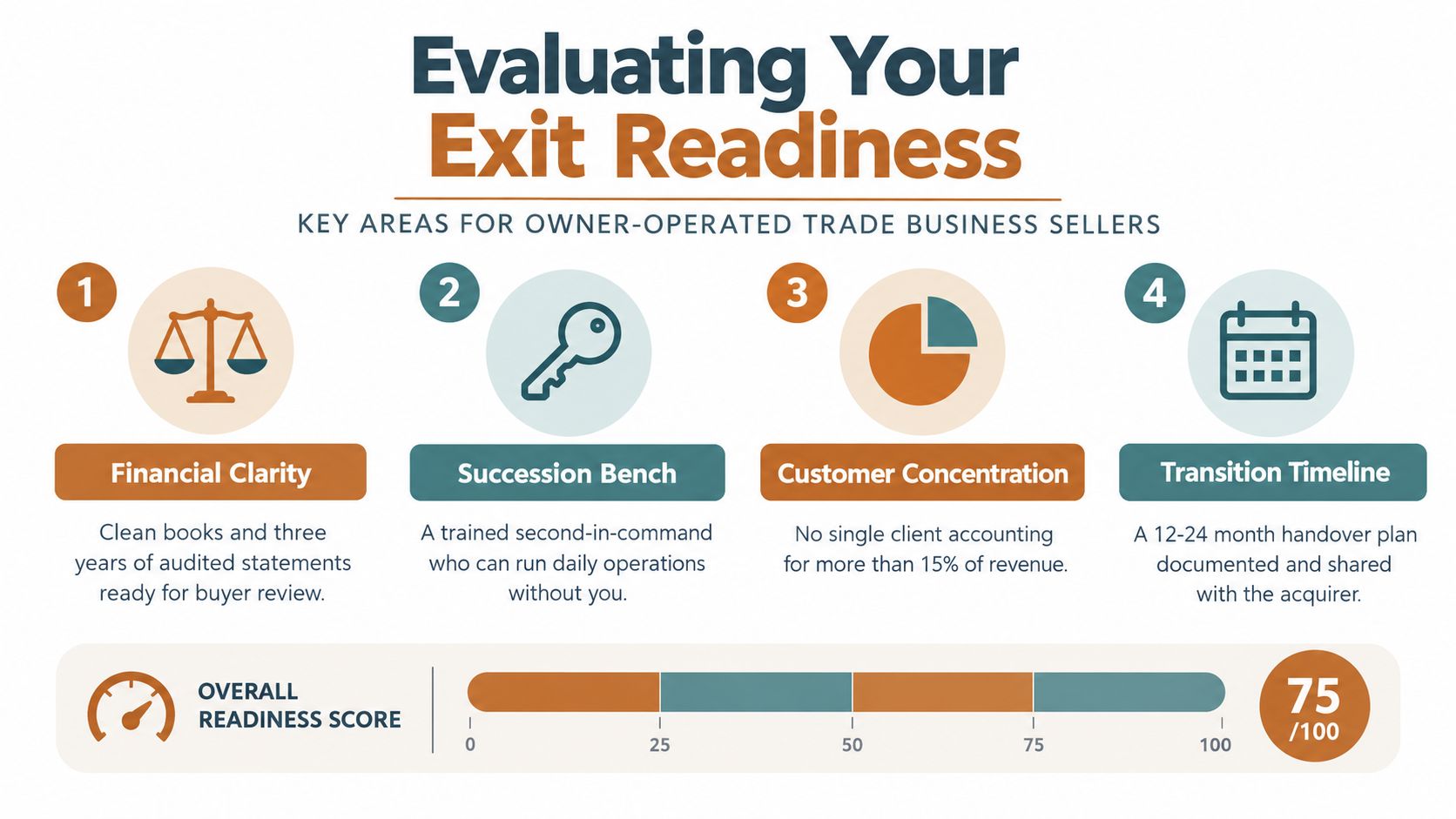
Use this short checklist.
You’re more likely to fit a tuck-in well if these statements are true:
If those aren’t true, you may still sell. You just may need a different structure, a different buyer, or more preparation before going to market.
Ask yourself one hard question. If your business name disappeared in six months, would the value of the company largely remain?
If the answer is yes, a tuck-in may suit you. If the answer is no, don’t let a buyer price you as if your brand, local trust, and founder role are easy to replace.
A good exit isn’t just about signing. It’s about understanding what exactly you are selling, what disappears after closing, and what has to be protected before you let go.
If you’re weighing a tuck-in offer, you need clear answers on value, taxes, legal structure, and post-close transition before you give a buyer exclusivity. The Owner’s Shortlist helps long-tenured business owners find vetted specialists in those exact areas and publishes plain-English guidance for decisions like this one. If you want to know what your company is worth in a tuck-in and what parts of the business are most at risk in integration, start there.
Tell us your situation. We'll connect you with a specialist who works with owners like you. One conversation, no sales pressure.
Found this useful?
Add The Owner's Shortlist as a preferred source and get our articles highlighted in Google Search results.
Add to Preferred SourcesLearn what reps & warranties mean in M&A deals, why they matter, and how to negotiate them effectively. A clear guide for business owners.
September 27, 2026
Your business's sale price and your retirement number are two different figures. Here's how to build the second one before you rely on the first.
September 21, 2026
Ten straight questions to work through before you set a retirement date, with a short answer to each and where to go deeper on your own time.
September 21, 2026
Being financially ready to sell and having a plan for your time are two different things. Here's why the second one catches so many owners by surprise.
September 21, 2026