How to Sell My Business Without a Broker
Learn how to sell my business without a broker. This guide covers valuation, buyer screening, deal structure, and when to hire specialists to protect your exit.
September 26, 2026
By Remi Taffin · August 2, 2026 · Updated September 7, 2026
You’ve built something real in Orlando, and now the hard part is choosing who should help you sell it. The search for business brokerage Orlando FL usually starts when the owner is busy, the numbers are decent, and the next move feels too important to guess on. The wrong advisor can waste months, leak confidentiality, and miss the buyer who would pay for what you’ve built. The right one can frame the company properly, screen buyers, and keep the process moving without pulling you out of the business.
Orlando is a crowded market for intermediary help, and that’s not just a headline. Florida has about 1 IBBA-member business broker for every 584 employer businesses, compared with 1 per 23,000 in Vermont, a 40× coverage gap that signals a much denser broker environment in Florida, including Central Florida according to Biz Broker Match data. That density gives owners more choice, but it also means the quality gap between advisors is wider than many sellers expect. And in our experience, that gap has less to do with the firm name and more to do with the individual broker. The brand gets you in the door. The person determines what actually happens to your deal.
The first call is not about firms, it is about fit. If you own a local service company, restaurant, retail shop, or trade business and expect a straightforward sale to an individual buyer, a business broker usually fits the job. If the company is larger, the buyer pool is more discerning, or the deal needs a tighter process that reaches strategic buyers and private equity, an M&A advisor is the better match.
That distinction matters in Orlando because both types of advisors are active here, and they do not run the same process. A listing-focused broker is usually set up to market a business to individual buyers and smaller operators. An M&A advisor is built to manage a more controlled sale with broader outreach, tighter screening, and more coordination around deal structure. If you want a clear explanation before you start calling firms, this guide on whether to use a broker, an M&A advisor, or sell on your own is a practical place to start.
If the business is owner-operated, modest in size, and likely to attract local buyers, a broker is usually the practical choice. That path can be faster to launch and easier to manage, but it may also bring in more casual buyers who need more screening and more hand-holding.
If the company has cleaner financials, a stronger management layer, or a broader appeal beyond Orlando, an M&A advisor can create a better sale process. The trade-off is cost, process depth, and the level of preparation required before the business goes to market. Owners often pay for that extra structure because it can improve buyer quality and reduce noise.
The right advisor should match how your company will sell. If the first conversations you have are focused on valuation, buyer fit, confidentiality, and process design, you are talking to the right kind of professional.
The first call should not be about which firm has the flashiest website. It should be about which kind of advisor fits the business you own. A business broker is usually the better match for a Main Street sale, especially if you are selling a local service company, restaurant, retail shop, or trade business with a smaller transaction profile. An M&A advisor is a better fit when the company is larger, the buyer pool is more developed, or the sale needs a structured process that reaches strategic acquirers and private equity.
For Orlando owners, that distinction matters because the local market includes both types of professionals, and they do not do the same job. A listing-based broker is usually built to market a company to individual buyers and small operators. An M&A advisor is built to run a tighter, more controlled process. If you want a straight explanation of that split before you start outreach, this guide on using a broker, an M&A advisor, or going solo is a useful starting point.
If your business is modest in size, owner-operated, and likely to attract local buyers, a broker is usually the practical choice. If your company has more complexity, stronger transferable earnings, or a higher level of buyer sophistication, an M&A advisor can protect value by screening the process more carefully. The mistake I see often is owners hiring based on brand familiarity rather than fit.
Practical rule: if the buyer needs a lender, a simple asset deal, and a manageable handoff, a broker may be enough. If the buyer is likely a competitor, a roll-up platform, or a financial sponsor, the process usually belongs with an M&A advisor.
The most important question is not who has the biggest network. It is who regularly handles businesses like yours, at your deal size, with your confidentiality needs. A broker or advisor who understands those constraints will ask better questions, set expectations earlier, and avoid wasting time on buyers who are never going to close.
Before you sign an engagement, ask the practical questions that reveal how they work. If you want a starting list, these questions to ask a business broker help you compare process, screening, and communication style.
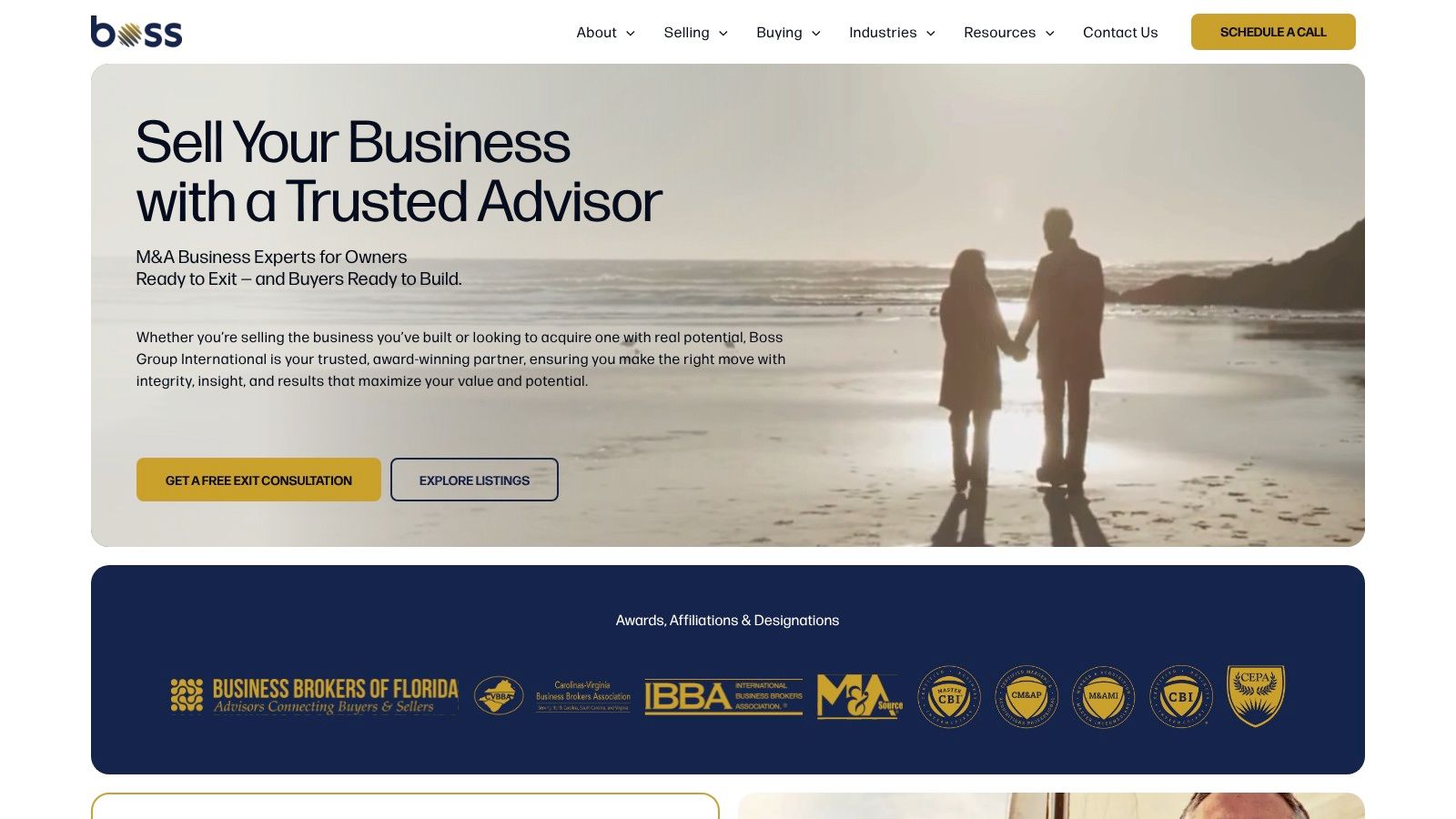
Boss Group International stands out for owners who want a Florida-focused team with Orlando roots and a broader statewide reach. The firm positions itself around valuation guidance, confidential packaging, targeted outreach, and hands-on deal management from start to finish. That combination matters if you want one team to manage the whole path, not just post a listing and hope buyers appear.
Boss Group’s appeal is local depth with a network feel. Orlando owners often need someone who understands Central Florida’s buyer pool, but also has enough reach to look beyond the immediate metro when the right buyer is elsewhere in Florida. That matters in a state that has become one of the most broker-dense markets in the country, where competition among intermediaries is intense and specialization matters as much as access based on Biz Broker Match’s Florida broker data.
Boss Group can make sense if you want a boutique relationship and don’t want to feel like one file in a national queue. It also works for sellers who value confidentiality and want active management through closing, not a light-touch introduction to the market. If you’re trying to keep staff, customers, and competitors from knowing the business is for sale too early, that process discipline is worth paying attention to.
You should still ask hard questions. Boutique capacity can be an advantage, but it can also mean fewer simultaneous engagements and less room for weak communication. Before you sign anything, use these questions to ask a business broker and press for specifics on buyer outreach, reporting cadence, and who handles your deal day to day.
Crowne Atlantic is a good fit for owners who want a local shop that explains the selling process in plain language. Its Orlando-Maitland presence and process education pages are useful for first-time sellers who don’t want jargon or a hard sell. The firm also emphasizes confidential marketing and buyer qualification, which is where many early conversations with owners should start.
This kind of boutique brokerage can be especially useful for owner-operated businesses across trades, services, distribution, and light manufacturing. Sellers in those categories usually need clear explanations of what to prepare, what buyers will question, and how to keep the sale discreet. A local advisor who writes for that audience often gives better guidance than a large platform that leans on generic process pages.
The upside is simple communication. You’re more likely to know who is representing you, and you can usually get direct answers without going through layers of staff. That can reduce friction when the deal starts moving and decisions need to be made quickly.
The downside is capacity. Smaller firms can be stretched depending on season and deal flow, so owners need to ask about bandwidth before assuming they’ll get rapid attention. Commission details are not always published upfront either, so the economics need to be confirmed in writing before you move forward.
For sellers who want a simple, local explanation of buyer qualification, confidentiality, and marketing basics, Crowne Atlantic fits that brief. For owners whose transaction is likely to attract strategic buyers or require broader market coverage, the conversation should also include whether the firm’s reach matches the complexity of the sale.
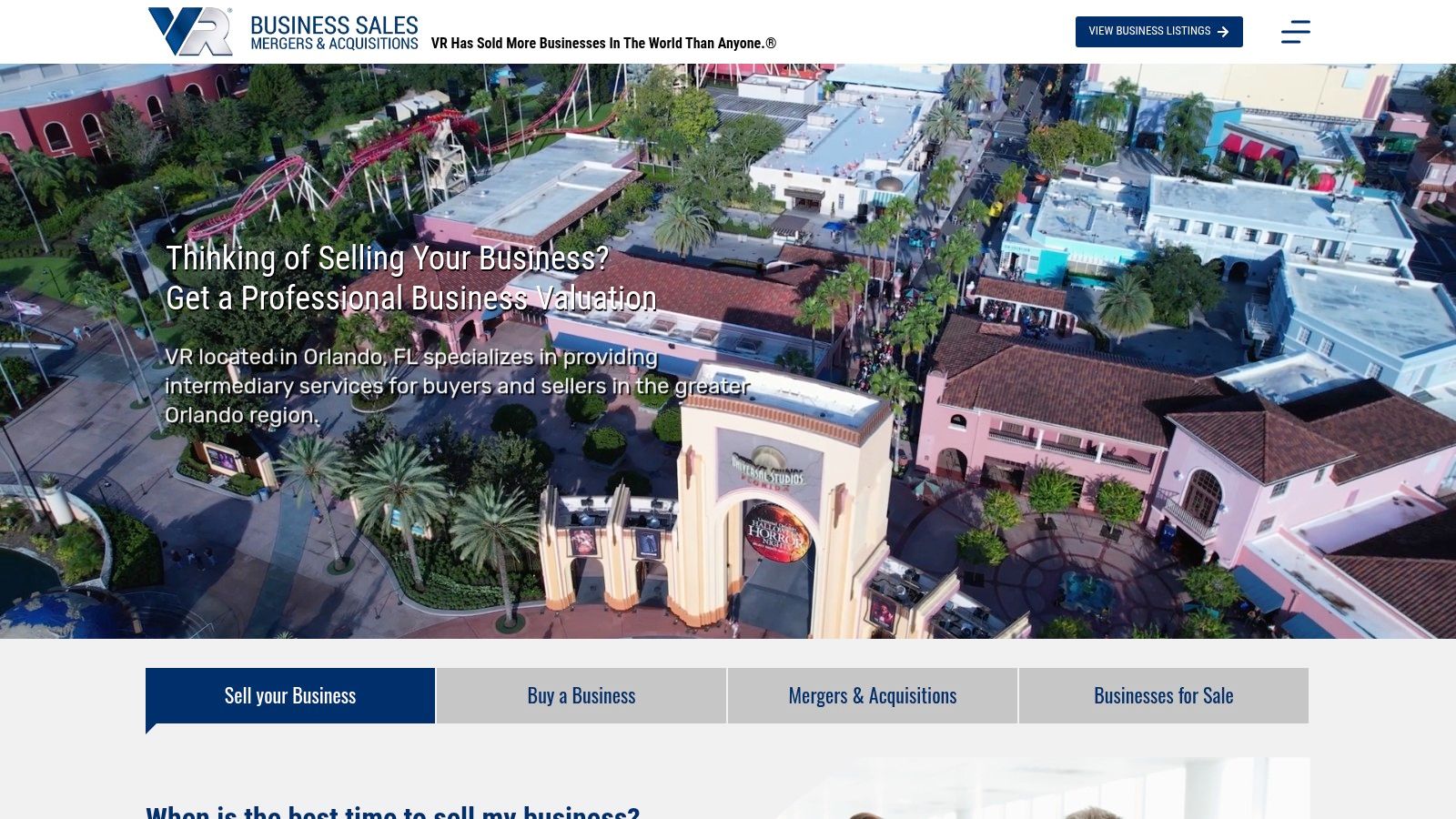
A seller who wants a defined process often looks at VR Business Brokers Orlando first. The local office pairs a national brand with a clear operating style, which can help owners who want structured selling steps, written process materials, and a broker who can use co-broker relationships to widen exposure. For a first-time seller, that kind of setup can make the work feel more concrete, because each stage has a place and a purpose.
The strongest case for a national franchise is consistency. Sellers usually get a familiar framework for valuation, confidentiality, and buyer communication, which lowers the chance that the sale is being improvised as it goes. The co-broker model can also widen exposure, since brokers inside the network may bring buyer interest that a smaller office would not reach on its own.
A franchise name does not replace the broker handling the file. That person still needs to know the business, explain the process clearly, and talk plainly about fees and expectations. If the Orlando lead cannot do that, the brand does not solve the problem.
For owners who want structure, VR can be a practical fit. For owners who want to compare firms with more context, a directory of Florida business brokers like The Owner’s Shortlist’s Florida broker directory can help you see how local offices differ in reach and focus. VR is less compelling if you assume the brand alone will produce a better sale. In this category, the interview matters more than the logo.
Sunbelt’s Orlando office is another strong contender for owners who want reach. The network model gives sellers access to broader buyer databases and cross-office syndication, which can matter when the right buyer isn’t sitting in your immediate circle. Sunbelt also offers broker opinion of value work, listing preparation, confidential marketing, and buyer search support through the Orlando office.
This is the kind of firm owners often consider when they want both familiarity and scale. The brand is known in the market, which can help with lender conversations and buyer confidence. Florida’s brokerage environment is busy, with Business Brokers of Florida reporting over $900 million in closed transactions in 2025, 1,140+ sold businesses, and 12,000+ active buyers, so a network that can route your listing to a large pool has obvious appeal from BBFMLS.
A large database can widen exposure, but exposure alone doesn’t sell a business. The firm still has to package the company well, qualify buyers carefully, and keep the process disciplined once interest appears. If you don’t ask who is doing the follow-up, the scale can become noise.
The practical upside is cross-office reach and a familiar brand for financial partners. The practical downside is the same one you see with any franchise, variability. Always interview the Orlando lead, ask about recent relevant deals, and confirm any fee minimums before you proceed.
If you want broader market visibility and are comfortable vetting the local office carefully, Sunbelt deserves a look. Just don’t confuse a large network with the right broker.
Transworld is a strong option for sellers who want a well-known platform and a broad marketing infrastructure. The Orlando branch handles listings, confidential marketing, valuations, and franchise resales, which gives it a wider set of use cases than many local shops. That can be valuable if your business is likely to appeal to both independent buyers and operators already active in franchised or systemized models.
Transworld’s biggest advantage is buyer matching at scale. Larger networks can generate more inquiries, and Orlando has enough business depth that a broad platform often makes sense for the right file. That is especially true for owners who want a broker with process tools and a recognizable name when buyers start asking who is on the other side of the table.
This is one of the places where vetting matters most. Franchise systems can produce strong results, but performance still varies by office and by individual broker. Ask the Orlando lead about the last few businesses they handled that are similar to yours, not just their general experience.
It also helps to be direct about fees and contract terms. If a firm doesn’t publish those details online, that’s not automatically a problem, but you should still confirm everything in writing before you commit. Sellers often focus on reach and forget that the process is carried by one person or one small team, not the whole brand.
Transworld fits owners who value scale, systemized marketing, and a familiar name in the market. It works best when the Orlando broker knows your sector and can explain how they’ll use the network for your specific sale.
Morgan and Westfield is different from the more traditional commission-only model, and that difference is the point. The Orlando office presents a process-driven approach and publishes fixed-fee and hourly billing options in addition to hybrid structures. For some owners, that makes the advisory relationship feel more predictable, especially when the company is straightforward enough that a percentage-based fee doesn’t feel like the only sensible structure.
This option is worth considering if you care about cost clarity. Not every business needs the same billing model, and some sellers would rather compare options openly than assume commission is the only path. The firm also provides a structured content library, which is helpful for owners who want to understand the process before handing over the file.
If your priority is predictability, ask how the fee structure changes as complexity rises.
That question matters here more than anywhere else on the list. Fixed-fee or hourly work can be a good fit, but not every deal size or complexity level qualifies, and buyer outreach can be more limited than what a big franchise can offer. The right follow-up question is how they plan to reach buyers if your deal needs broader exposure than their usual model provides.
Morgan and Westfield fits sellers who want a process-first conversation and value billing clarity. It’s a smart call if you’re comparing traditional brokerage economics against an advisory model that’s easier to forecast.
| Service / Firm | Complexity | Resources | Expected outcomes | Ideal use cases | Key advantages |
|---|---|---|---|---|---|
| First, Decide: Business Broker or M&A Advisor? | Low, assessment step; choose path before engagement | Time to evaluate revenue, industry and deal goals | Better advisor fit; reduced wasted time/fees | Owners deciding sale route; revenue thresholding (<$5M → broker, $5M+ → M&A) | Prevents mismatched engagements; clearer process choice |
| Boss Group International (Orlando) | Moderate, boutique, hands-on process | Local Orlando team + statewide buyer lists; platform visibility | Strong local reach and personalized deal management | Sellers in Central Florida seeking statewide exposure | Local market depth; credibility and platform listings |
| Crowne Atlantic Business Brokers (Orlando/Maitland) | Low–Moderate, straightforward boutique process | Small local team focused on owner-operated businesses | Confidential marketing, buyer qualification, plain-language guidance | First-time sellers and owner-operated trades/services | Local focus; simple communication and educational materials |
| VR Business Brokers – Orlando | Moderate, documented, franchise process with co-brokering | Local franchise office + national network and co-broker framework | Broader buyer exposure; structured seller roadmap | Sellers wanting national reach with a local contact | National network access; clear step-by-step resources |
| Sunbelt Business Brokers of Orlando | Moderate, networked cross-office syndication | Large global network and cross-office buyer database | Wide outreach, lender familiarity, increased buyer pool | Sellers seeking broad exposure and SBA-lender comfort | Large buyer database and brand recognition |
| Transworld Business Advisors – Orlando | Moderate, franchise systems and national infrastructure | National brand systems for packaging and buyer matching | Increased inbound leads and standardized marketing | Sellers who want strong brand infrastructure and franchise resale support | Scale and marketing infrastructure to drive inquiries |
| Morgan & Westfield – Orlando | Moderate, process-driven with alternative billing | Local office + national content; fixed-fee/hybrid billing options | Cost predictability and professional packaging; structured expectations | Sellers preferring fixed-fee or hybrid billing and clear timelines | Transparent fees/options; process clarity and professional presentation |
You’ve got a useful shortlist now, but the test starts in the first conversation. Any serious provider of business brokerage Orlando FL services should be able to answer direct questions without hiding behind vague marketing language. Ask how many comparable deals they’ve handled recently, what buyer pools they’ll reach for a company like yours, and who will be your day-to-day contact.
Fee structure deserves just as much attention. Ask about commission, any upfront valuation or retainer costs, and whether their agreement changes if the deal becomes more complex than expected. A broker who is vague about fees before engagement is unlikely to become clearer after you sign.
Confidentiality is another essential topic. You need to know how they screen buyers, whether NDAs are required before identifying your company, and how they limit exposure to employees, suppliers, and competitors. In a market as active as Orlando, process discipline is part of the service, not a nice-to-have.
Selection quality matters more than local name recognition. Florida’s high broker density means you have options, but it also means the competition for listings is intense, and the best fit is usually the advisor with the clearest process and the most relevant buyer network. If you want more plain-language support around valuation, taxes, legal prep, and advisor selection, The Owner’s Shortlist is built for exactly that kind of owner decision-making.
If you want a plain-language way to compare Orlando deal advisors, The Owner’s Shortlist organizes vetted specialists and practical guides for owners preparing to sell. It can help you sort valuation, tax, legal, and intermediary questions before you commit to a broker or M&A advisor, so your first calls are more productive and less guesswork-driven.
Tell us your situation. We'll connect you with a specialist who works with owners like you. One conversation, no sales pressure.
Found this useful?
Add The Owner's Shortlist as a preferred source and get our articles highlighted in Google Search results.
Add to Preferred SourcesLearn how to sell my business without a broker. This guide covers valuation, buyer screening, deal structure, and when to hire specialists to protect your exit.
September 26, 2026
CBI, M&AMI, and CEPA sound similar but prove different things. Here's what each credential actually certifies, and how to verify one before you rely on it.
September 25, 2026
Local brokers know your market. Regional brokers have reach. National niche brokers own one vertical. Here's how to pick the right type for your sale.
September 12, 2026
Explore our curated list of the top business brokerage firms for 2026. Compare services, fees, and find the right partner to sell your owner-operated business.
July 31, 2026