How to choose the best business broker for your business
The best business broker is the one who sells businesses like yours, at your size, to your kind of buyer. Here's how to tell who fits, trade by trade.
October 18, 2026
By Remi Taffin · October 16, 2026
You’ve spent 25 years building the phone calls, the trucks, the dispatch system, and the customer list. Now the question isn’t whether you need help, it’s who should lead first when you’re three years out from a sale and the number on the table has to support your life after the business. For a plumbing or HVAC owner, broker vs financial advisor is not a personality contest. It’s a sequence problem.
If you’re running a service business in the $1 million to $50 million range, the wrong first move wastes time and gives you bad numbers to work with. A broker helps with the company sale. A financial advisor helps you turn sale proceeds into a personal plan. If you want a plain-language resource on how owners also earn from business referrals, that’s a separate topic from exit planning, but it shows how often these roles sit around the same transition.
A commercial cleaning owner I’d put in the same bucket as a plumbing or HVAC operator usually doesn’t wake up thinking about “wealth management.” He thinks about crews, margins, service contracts, equipment, and whether the business can support his exit in three years. Then the sale conversation starts, and the first instinct is to ask, “Do I need a broker or a financial advisor?”
That’s the wrong way to frame it. The issue is that the exit touches valuation, deal structure, taxes, retirement income, and estate decisions all at once. A clean sale can still create a lousy personal outcome if the proceeds land in the wrong place, the tax bill is ignored, or the owner never defined the walk-away number.
Start with the personal picture, not the transaction pitch. If you know what you need after tax, what debt has to go away, and what level of monthly income makes sense, then the sale process has a target. Without that, you can get talked into a deal that looks fine on paper and still misses the life you wanted after the close.
Practical rule: If the business sale won’t change your household plan, you’re not ready to shop for a deal yet.
That’s why the search often begins with a planning conversation, then moves to a transaction specialist, then comes back to planning again. A useful outside resource on this sequencing is the overview at what an exit planning advisor does, because it treats the exit as a coordinated process instead of a one-shot sale.
Most content treats the choice as binary. That works for an investor opening an account. It doesn’t work for an owner who has payroll, customers, equipment loans, and family wealth tied to one operating company. You don’t just need someone to sell something or manage money. You need someone to solve the bridge between the business value and your personal life.
For a hands-on owner, the useful questions are simple. Who should talk first, who should handle the sale process, and who should come back in once offer terms start changing the shape of your future? If an article doesn’t answer those questions, it isn’t written for you.
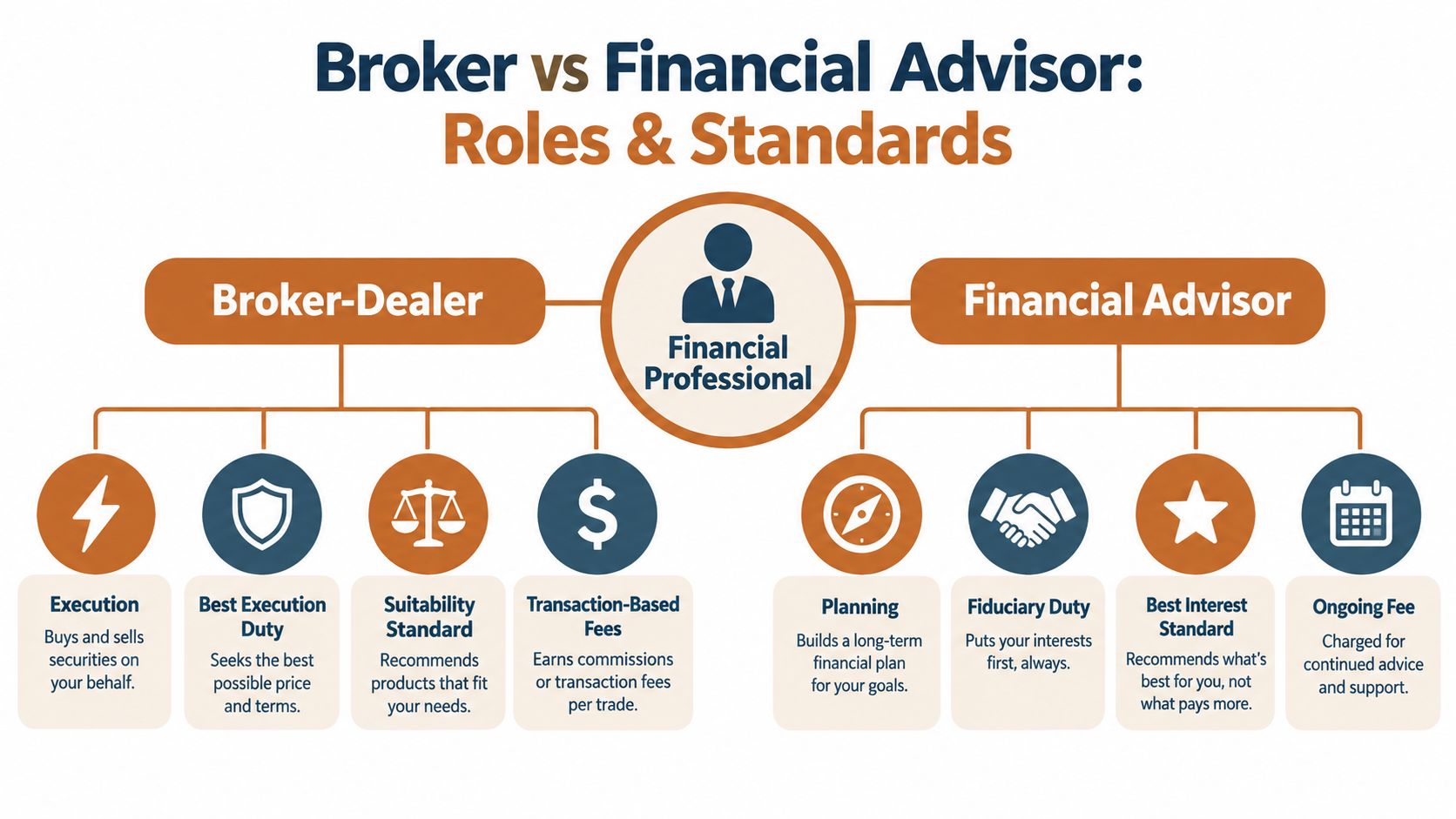
The title on a business card can mislead you. A person can call themselves a financial advisor and still be acting as a broker, an investment adviser, or both depending on the service and the account. That matters because the standard they owe you changes with the capacity they’re acting in, not just the label they use.
The SEC has described the traditional split clearly, broker-dealers execute securities transactions and usually earn commissions, while investment advisers provide recommendations or manage assets for a fee. Under the Investment Advisers Act of 1940, an adviser generally owes fiduciary duties of loyalty and care. A broker-dealer, by contrast, has traditionally operated under a suitability framework, and broker-dealers making a recommendation to a retail customer must comply with Regulation Best Interest at the time of that recommendation. You can read the SEC’s own description of the broker-dealer and adviser standard in its staff bulletin on retail account recommendations and in the SEC speech on the traditional split between commissions and fees, plus the investor protection discussion from Kons Law’s broker vs financial advisor guide if you want a plain-English legal summary.
If someone is managing your sale proceeds over time, you care about ongoing fiduciary duty, disclosure of conflicts, and whether they’re expected to monitor the account. If someone is only making a one-time recommendation or executing a transaction, the obligation is narrower. That’s why the words “financial advisor” by themselves don’t tell you enough.
For an owner, the useful question is not “Are you a fiduciary in the abstract?” It’s “What capacity are you acting in for this specific recommendation?” The SEC’s 2025 examination priorities also point examiners toward whether advisers meet duties of care and loyalty, disclose conflicts, and recommend brokerage versus advisory accounts appropriately. That reinforces the point. The test is the actual relationship, not the marketing label.
Before you trust a recommendation, ask for the firm’s Form CRS, registration status, and whether the relationship is transactional or ongoing. If the same person works in both capacities, make them tell you which hat they’re wearing for each task. That’s not nitpicking. That’s how you avoid paying advisory fees for brokerage-style execution, or assuming fiduciary oversight where none is promised.
If the answer to “who are you for me in this moment?” is fuzzy, the relationship is already too vague.
The cleanest way to compare broker vs financial advisor is to put the differences where they belong, on the page. A broker-dealer helps with securities transactions and product access. An investment adviser helps with planning, portfolio management, and often ongoing monitoring. For an owner moving from business value to personal wealth, those are not the same job.
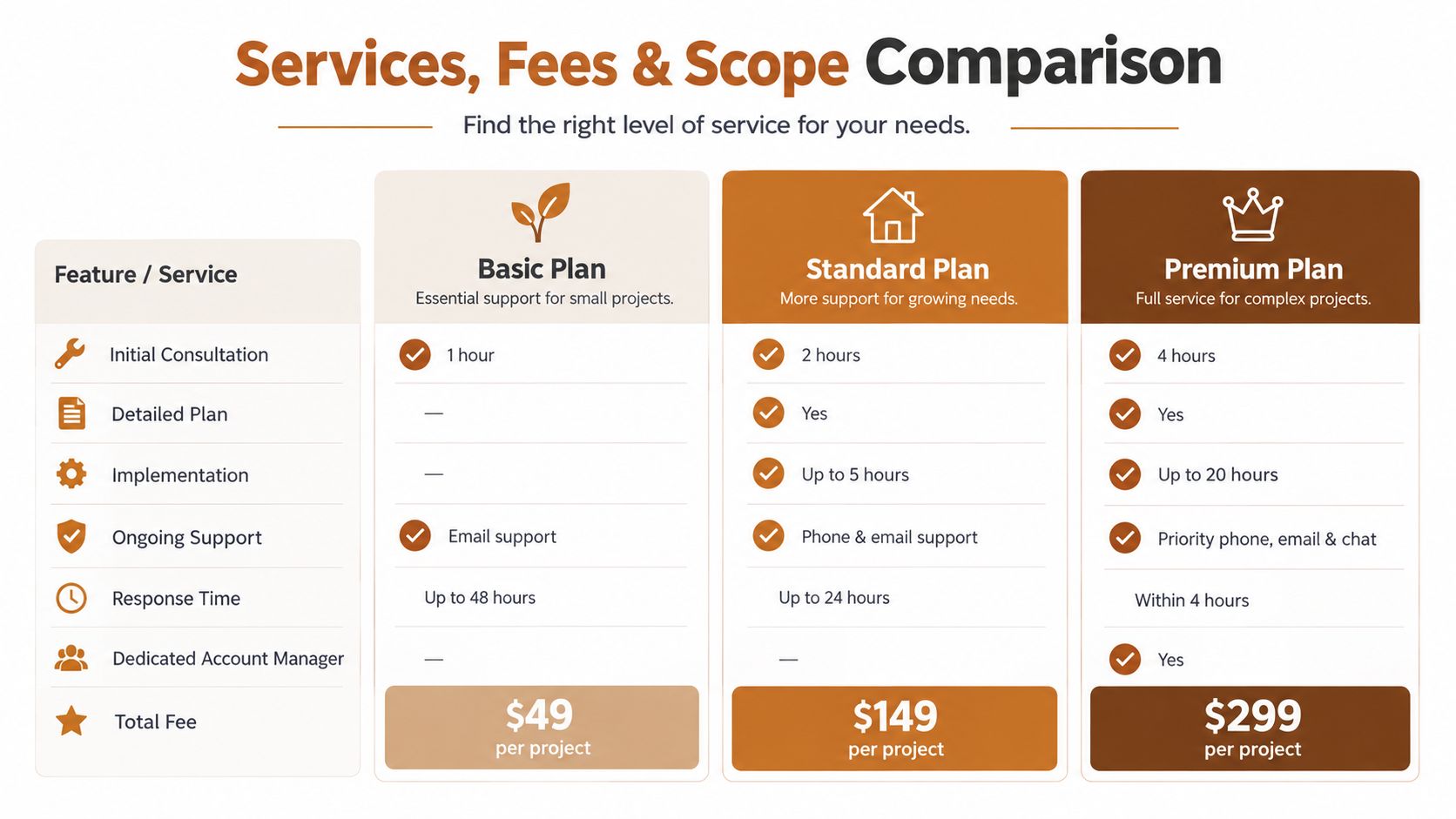
| Criterion | Broker-Dealer | Investment Adviser |
|---|---|---|
| What they do | Execute securities transactions, recommend securities or investment strategies | Provide investment advice, manage portfolios, and often ongoing planning |
| How they’re paid | Usually commissions, transaction-based compensation, or a mix | Usually fees, often asset-based, flat, or hourly |
| Legal standard | Suitability framework plus Regulation Best Interest for retail recommendations | Fiduciary duties of loyalty and care under the Advisers Act |
| Scope of service | Often transactional, sometimes limited to specific products or trades | Often ongoing, including monitoring where agreed or expected |
| Best fit | Occasional transaction needs, product access, execution | Continuing planning, withdrawal strategy, tax-aware allocation, monitoring |
| What the owner gets | Trade execution and brokerage product access | Coordinated advice around wealth, taxes, and retirement planning |
The right answer for a business owner isn’t “always use one and never the other.” It’s “use the one whose scope matches the job.” A broker can be economically sensible for a discrete transaction. An adviser can be the right fit when the proceeds need to be turned into a personal plan that lasts beyond closing day.
A broker usually belongs in the sale chapter. A financial adviser belongs in the life-after-sale chapter. They can overlap in casual conversation, but the work is different enough that one should not replace the other by default.
For a deeper decision path on selling your company, the guide at should I use a broker, M&A advisor, or go solo is useful because it frames the transaction side of the decision without pretending the personal side disappears.
Ask whether the person is built to handle your problem or just to win your account. A broker should be able to explain how the transaction will be run, what they’ve sold before, and what the process costs. An adviser should be able to explain how they’ll handle the proceeds, what monitoring means, and how they’re paid across the relationship.
That’s the useful comparison. Not a slogan, a use case.
A percentage on a brochure doesn’t tell you much. Dollar cost does. SEC guidance says the comparison should be made at the portfolio level, not by looking only at a quoted commission or advisory fee. That means commissions, markups or markdowns, transaction costs, sales loads, advisory or management fees, revenue sharing, administrative charges, trading costs, and embedded product expenses all belong in the conversation.
For a service-business owner, that matters because post-sale money is usually large enough that small-looking percentages stop being small. The SEC’s example is blunt, a 1% annual advisory fee on $2 million is $20,000 per year before fund expenses and trading costs. At a constant balance, five years totals $100,000 before compounding effects. That’s real money, and it should be tied to real service.

If you compare a commission to an advisory percentage in isolation, you’ll fool yourself. The broker might look cheaper on the page and still cost more once product expenses and trading costs show up. The adviser might look expensive and still earn the fee if the ongoing planning helps with tax-aware withdrawal strategy, rebalancing, and monitoring.
A fair owner-level request sounds like this, “Show me the all-in dollar cost under both arrangements.” That means product expenses, expected transaction activity, and any recurring charges should be laid out in dollars, not just percentages. If the answer is vague, the fee discussion is incomplete.
Rule of thumb: If the fee can’t be translated into dollars for your balance and your likely activity, you’re not comparing the real cost.
A recurring asset-based fee is not automatically bad. It’s only justified when the actual service is recurring too. If your situation is simple, you may not need constant portfolio oversight. If your household cash flow, tax exposure, and retirement draw plan are more complex, ongoing advice can earn its keep.
The key is discipline. Don’t pay for a monitoring relationship if you’re really buying a few trades and a quarterly check-in. Don’t chase the lowest headline cost if it strips out the planning you’ll need after the sale.
Three years out, the first move is usually not a broker. It’s a planning conversation that defines what “enough” looks like for you and your spouse, your debt, and your tax exposure. After that, the sale process has a target instead of a guess. That’s the sequence that keeps the transaction from driving the plan.
A broker is transaction-oriented. An adviser is personal-finance-oriented. Those are different lenses, and if you mix them up too early, you can get a sales process that looks active but doesn’t move your life forward.
The same owner can end up paying two professionals to say slightly different versions of the same thing. That’s waste. The better setup is clean handoffs. One person leads the sale, the other leads the personal plan, and both know where their lane ends.
A plain-English guide to this kind of role split is the article on business advisor role vs, which is useful if you’re trying to separate advisory work from sales work without getting lost in jargon. The point is simple, use each specialist where their work matters.
A service business owner three years from a sale needs a walk-away number before anyone starts shopping the deal. If a broker runs the process first, the process can drift toward a price that looks strong on paper but does not fit the owner’s life after closing.
The succession gap is real. Gallup’s succession reporting says 74% of U.S. employer-business owners expect to sell or transfer ownership when they retire, yet many still have no formal plan. A 2025 U.S. Bank survey found that only 54% of small-business owners had a formal succession plan, even though 85% said they became owners to create something they could pass on and 84% were seeking generational wealth. Owners clearly want an exit. The weak point is the personal plan behind it.
A financial advisor starts with the owner’s household reality. Cash needs, taxes, income after the sale, and how much risk the family can keep on the books all come first. Once that target is clear, a broker can work the transaction against it and bring buyer outreach, valuation, and negotiation to the table.
If you reverse that order, you get a sale process that may be busy but badly aimed. A plumbing or HVAC owner can spend months fielding offers, then discover the business sale leaves too much money locked up in rollover equity or too little cash for retirement. At that point, the issue is not the buyer list. It is the fact that no one defined the finish line before the market got involved.
A broker cannot do the personal planning job. A financial advisor cannot sell the company. If you want a plain-English breakdown of how those lanes differ, the article on business advisor role vs is useful. The right sequence is simple. Set the owner’s number first, then let the broker work the deal, then bring the advisor back when terms are on the table.
Don’t hire on charm. Ask direct questions and insist on direct answers. A first call should tell you what capacity they’re acting in, how they’re paid, and where the conflicts live.
That same discipline is useful whether you’re interviewing a broker or a planner. The question list at questions to ask a business broker is a good companion piece because it keeps the sale side grounded in specifics instead of promises.
If you’re three years from selling a service business, use The Owner’s Shortlist to get clear on who should lead your exit and what kind of specialist fits your situation. Visit The Owner’s Shortlist, compare the roles, and start the next conversation with the right person first.
Tell us your situation. We'll connect you with a specialist who works with owners like you. One conversation, no sales pressure.
Found this useful?
Add The Owner's Shortlist as a preferred source and get our articles highlighted in Google Search results.
Add to Preferred SourcesThe best business broker is the one who sells businesses like yours, at your size, to your kind of buyer. Here's how to tell who fits, trade by trade.
October 18, 2026
Business broker naples. Sell your service business with a verified Naples broker. Learn vetting tips, pricing pitfalls, and how to get a confidential match
October 10, 2026
BizBuySell lists ads; it doesn't find you a broker. Compare The Owner's Shortlist, the IBBA and M&A Source directories, and 2 broker networks for 2026.
October 6, 2026
Learn how to sell my business without a broker. This guide covers valuation, buyer screening, deal structure, and when to hire specialists to protect your exit.
September 26, 2026