Sale-Leaseback: How to Sell Your Business and Keep the Building
Selling the business doesn't mean selling the building. Here's how a sale-leaseback works, what rent to charge, and what you give up along the way.
September 25, 2026
By Remi Taffin · July 10, 2026
You’re probably in one of two places right now. Either you’re tired of building someone else’s business and want a proven path into ownership, or you’ve looked at starting from scratch and decided you’d rather buy a system than invent one.
That instinct isn’t wrong. Franchising can reduce some of the chaos that kills new businesses. But it also locks you into a playbook, a fee structure, and a long legal relationship that many first-time buyers underestimate. If you’re asking how can I open a franchise, the practical answer isn’t “pick a brand and sign.” It’s “make a series of smart decisions in the right order, and bring in specialists before a bad assumption becomes an expensive contract.”
A lot of people get pulled into franchising because the structure feels safer than a blank-sheet startup. That’s a rational starting point. About 92% of new franchises remain operational after four years, compared with 47% of independent businesses over the same period, according to this franchise survival-rate summary.
That number matters. It tells you the model can work. It does not tell you the model will work for your personality, your goals, or your tolerance for taking orders from a brand after you’ve written the check.
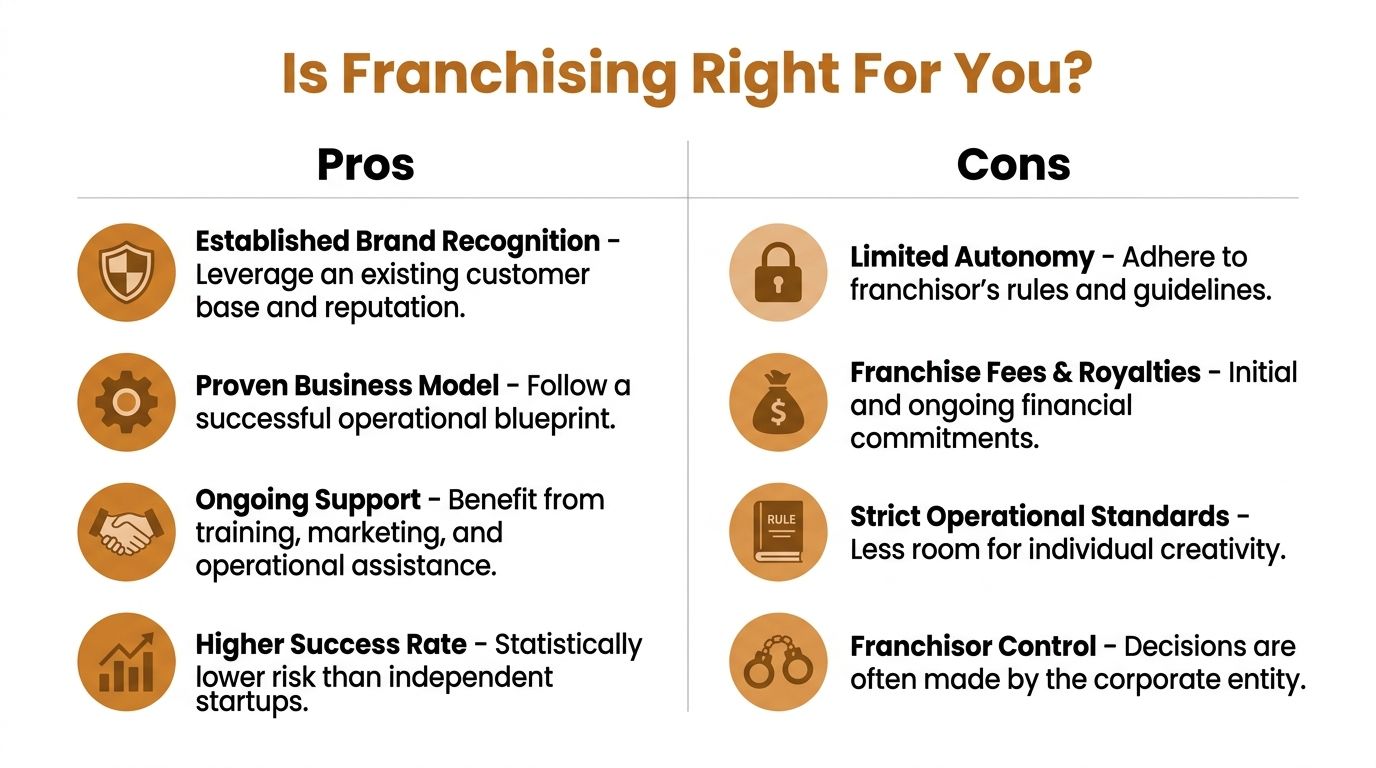
Franchising is a trade. You buy speed, systems, training, vendor relationships, brand recognition, and operating discipline. In exchange, you give up flexibility.
If you want to rewrite the menu, ignore the operating manual, change the marketing voice, source your own vendors, or run the business your own way because “your market is different,” you’re a poor fit for most franchises. That friction only gets worse after opening.
A clean way to judge yourself is this:
| Decision point | Better fit |
|---|---|
| You want proven processes and structure | Franchise |
| You want full creative control | Independent business |
| You’re comfortable with oversight | Franchise |
| You hate rules after you’ve paid for something | Independent business |
Practical rule: If following someone else’s system feels limiting now, it will feel unbearable once you’re paying royalties every month.
The strongest first-time franchisees usually have a few traits in common:
Here’s the blunt version. A franchise is not passive because the brochure says “semi-absentee.” Even with support, you’re still responsible for labor, local execution, customer experience, and cash flow discipline.
If your real goal is autonomy above all else, don’t force yourself into a franchise because the success stats look comforting. If your goal is to own a business with a proven framework and you’re willing to operate inside boundaries, franchising may fit you very well.
Most buyers start in the wrong place. They start with the brand that caught their eye, not with a disciplined filter. That wastes time and makes you easier to sell.
Start narrower. Pick an industry you can live with for years, not one that just sounds trendy. Then build a scorecard before you talk to any development rep.

Use a simple filter and rank opportunities against your actual constraints:
Once a concept survives your first pass, ask for the Franchise Disclosure Document and stop relying on marketing material. Brochures exist to create interest. The FDD exists to force disclosure.
Here, smart buyers separate themselves from hopeful buyers.
Current franchisees will tell you what operations look like now. Former franchisees will tell you what happens when things go sideways. That second conversation is often more valuable.
The Federal Trade Commission material cited in this FTC franchise buying guide reference says 20-30% of franchisees leave a system within five years, and that prospective buyers should contact former owners about hidden exit issues such as exit fees or non-compete enforcement. The same source also notes that 90% of franchisor marketing materials omit clear exit frameworks.
Ask current owners questions like:
Ask former owners different questions:
Talk to people who no longer need to protect the relationship.
If you’re serious, write your questions down before every call. Don’t wing validation. Patterns matter more than any one opinion. If five people describe the same problem in different words, believe the pattern.
Most franchise mistakes are financial mistakes wearing a branding costume. Buyers focus on the franchise fee because it’s the easiest number to understand. That’s not the number that usually hurts them.
The dangerous number is the one they failed to model. Usually working capital, slower-than-expected ramp-up, or the drag from recurring fees.
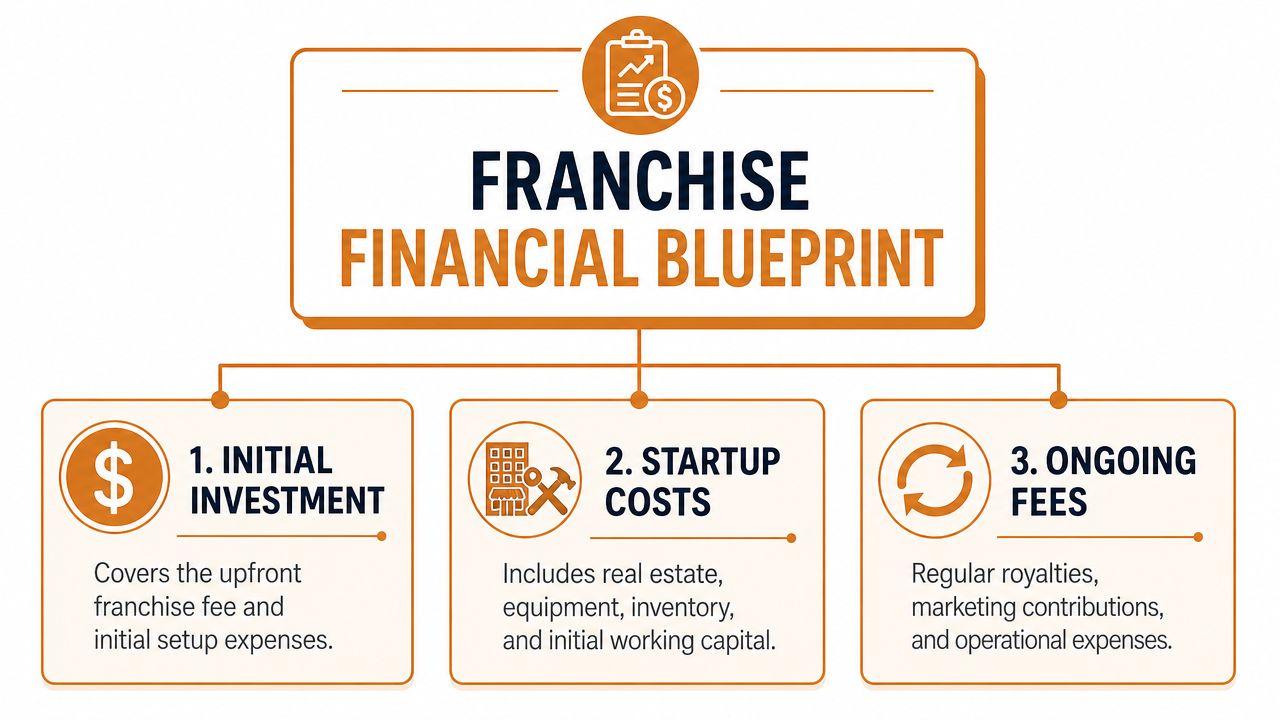
You need to separate the economics into three buckets:
Initial investment
This includes the upfront franchise fee and the costs to get the business ready to open.
Startup costs This is the main setup burden. Real estate, leasehold improvements, equipment, inventory, permits, technology, professional fees, and opening inventory all live here.
Ongoing fees
Royalties, required marketing contributions, tech fees, and normal operating expenses continue after opening.
If you’re exploring how to fund the purchase, review practical owner funding options at The Owner’s Shortlist financing guide.
A short explainer can help frame the moving pieces before you model your own deal:
This is the question too few buyers ask: would this business be more profitable without the franchise wrapper?
According to this franchise research question set on comparative profitability, independent HVAC businesses can average 15-20% net profit, while franchise equivalents may report 8-12% due to royalty fees. That doesn’t mean the franchise is a bad deal. It means support has a cost, and you need to decide whether that cost buys enough value.
Use this comparison lens:
| Financial question | Why it matters |
|---|---|
| What are total recurring fees? | They reduce operating margin every month |
| What must I buy from approved vendors? | Mandatory sourcing can raise costs |
| What does owner compensation look like? | Profit and paycheck are not the same thing |
| How does this compare to an independent operator in the same trade? | It tells you whether the system adds enough value |
Pride gets expensive.
If you’re using debt, bring in a financing specialist before you commit to a structure you don’t fully understand. If you’re tapping retirement funds or considering a more complicated funding path, involve a tax advisor before you move money.
Don’t ask “Can I get approved?” first. Ask “What capital structure leaves me enough room to survive a slow start?”
A good cash flow model should stress-test a weak opening period, not just the rosy version from a sales presentation. If the numbers only work when everything goes right, you don’t have a plan. You have a hope problem.
Many first-time buyers think the hard part is finding the brand. It isn’t. The hard part is understanding what you’re committing to for the next several years.
The FDD is a disclosure document. The Franchise Agreement is the contract that controls your life after signing. Those are not the same thing, and confusing them is a rookie mistake.
Don’t read the FDD like a stack of isolated sections. Read it like a narrative.
Start with turnover and system movement. Franchise guidance on success rates and Item 20 review makes the point clearly: success hinges on reviewing Item 20 of the FDD to analyze openings and closures, and even a system described as having a 90-95% success rate can mislead buyers if turnover is buried inside the data.
That means you should cross-check:
If Item 20 shows churn and Item 19 paints a glowing picture, don’t shrug and move on. Ask why.
This is the exact point where you hire a franchise attorney. Not your cousin who handles house closings. Not your friend’s general business lawyer unless they know franchise law cold.
Use a lawyer who reads franchise agreements every week. If you need a place to start, review specialist options through The Owner’s Shortlist legal directory.
A franchise attorney should review issues such as:
You are not buying a concept. You are signing a control document.
Many clauses won’t matter when things are going well. They matter when sales lag, a dispute starts, or you want out. That’s why legal review isn’t paperwork. It’s risk control.
Once you sign, the fantasy part ends. Now you’re managing a real project with deadlines, dependencies, local vendors, landlords, hiring needs, training requirements, and a franchisor watching brand compliance.
If you’re sloppy here, you can open late, over budget, understaffed, and already tired.
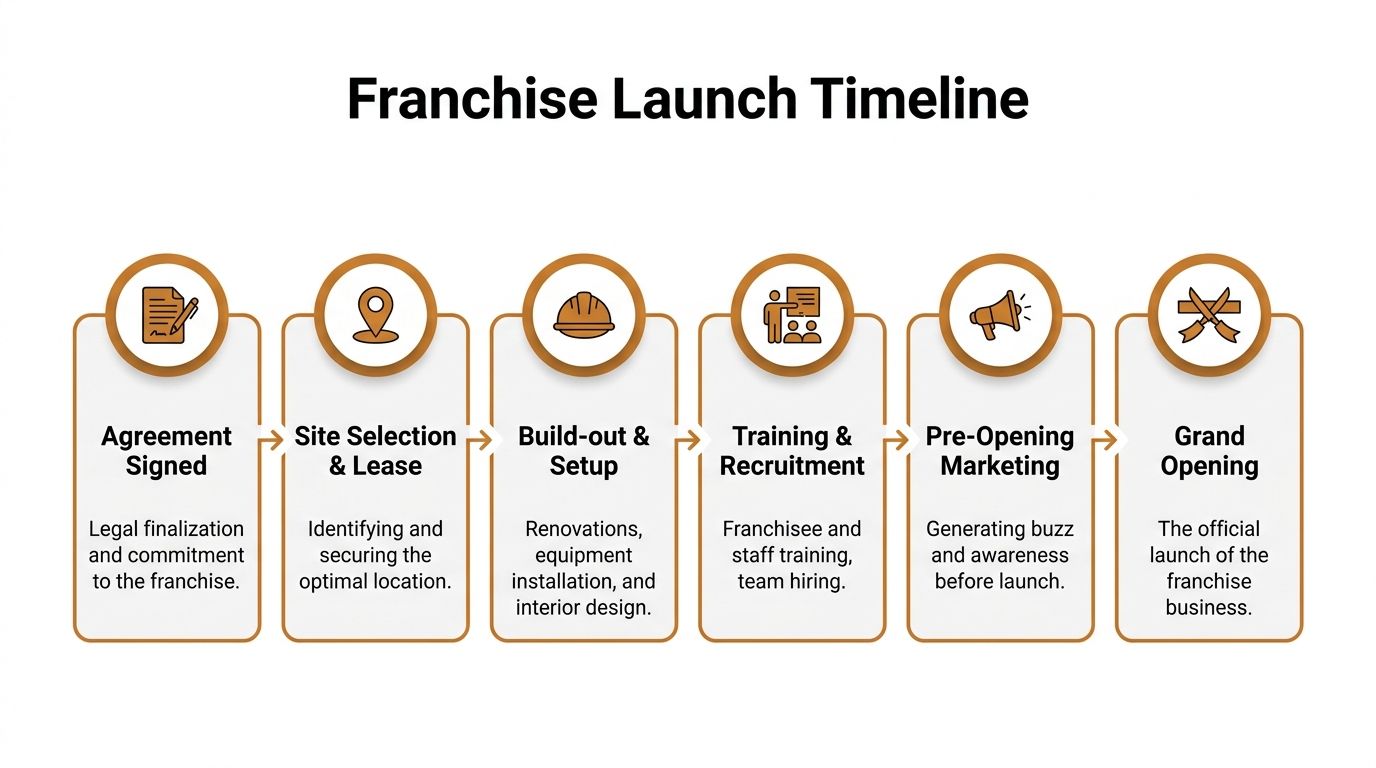
Treat launch as several parallel tracks, not one long checklist.
The actual sequencing will vary by concept. If you’re franchising an existing business model, one operational benchmark from this franchising conversion and pitfalls guide is that converting a business into a franchise system can take 3–12 months, with emphasis on documented standards, operating manuals, franchise model design, and ongoing training systems. Even if you’re buying into an existing franchise rather than creating one, the underlying lesson is the same: documented systems and disciplined rollout matter.
For hiring support and people-planning resources, see The Owner’s Shortlist employee guidance.
Most launch problems come from three failures.
First, owners underestimate lease risk. A bad lease can damage a good business for years.
Second, they delegate too much to vendors without a hard timeline. Contractors miss dates. Equipment gets delayed. Permits stall. If no one is tracking dependencies weekly, opening slips.
Third, they hire too late. Training under panic creates a weak opening team.
Use a simple launch rhythm:
A franchisor can provide the playbook. You still have to run the project.
Opening day is not the achievement that matters most. The true test is what the business looks like after the excitement wears off and the operating grind begins.
A franchise owner’s job is to protect standards, watch numbers, coach managers, and keep the unit healthy enough to become a durable asset rather than just a demanding job.
Good franchisees do two things at once. They follow the system closely, and they still think strategically about labor quality, local reputation, manager development, and long-term value.
That means paying attention to areas such as:
The strongest franchisees aren’t the most independent. They’re the ones who know when to follow, when to escalate, and when to tighten local execution.
This is another point many buyers ignore. They think about getting in, not getting out.
That’s backwards. Your exit options affect the quality of the investment from day one. Transfer rules, renewal rights, resale conditions, local financial performance, and documentation quality all shape what your unit will be worth to someone else.
Run the business like a future buyer will inspect it. Keep clean books. Build manager depth. Document processes. Understand the transfer restrictions in your agreement. If expansion becomes attractive, assess whether an additional unit improves value or just adds complexity.
A franchise can absolutely be part of a wealth-building plan. But only if you stop thinking like a buyer after signing and start thinking like an owner of an asset.
If you’re weighing franchise ownership and want help finding the right specialist before you make a legal, tax, financing, or growth decision, The Owner’s Shortlist is a practical place to start. It connects owners with vetted professionals across financing, legal, taxes, valuation, succession, and team decisions, so you can get the right advice before a costly mistake gets locked in.
Tell us your situation. We'll connect you with a specialist who works with owners like you. One conversation, no sales pressure.
Found this useful?
Add The Owner's Shortlist as a preferred source and get our articles highlighted in Google Search results.
Add to Preferred SourcesSelling the business doesn't mean selling the building. Here's how a sale-leaseback works, what rent to charge, and what you give up along the way.
September 25, 2026
Business loan vs line of credit explained for owners. Compare cost, flexibility, collateral, cash-flow impact, and the right scenarios for trades and SMBs.
September 24, 2026
Understand seller financing tax implications for owners, from installment sale rules and capital gains to depreciation recapture and state tax considerations.
September 16, 2026
Learn what is seller financing, how it structures business sales, and why 80% of small deals use it. Clear examples, math, and red flags for owners.
September 6, 2026